
Look, I’ve planned over 40 trips across 6 continents, and I’m going to be honest—most people approach travel like they’re booking a last-minute flight at 11 PM. Stressed, reactive, overpaying for everything. But travel doesn’t have to be that way.
Table of Contents
- Define Your Travel Goals and Budget First
- Research Travel Destinations Like You Actually Care
- Book Flights Using the Right Travel Tools and Timing
- Find Accommodation That Matches Your Travel Style
- Plan Activities and Experiences Without Tourist Traps
- Manage Travel Money Like You Have an Actual Budget
This guide walks you through the entire travel planning process. Not some generic overview. Real, actionable steps that’ll save you money, time, and a lot of headaches. Whether you’re planning a weekend getaway or a three-month backpacking adventure, this framework works.

Define Your Travel Goals and Budget First
Before you search a single flight or book a single hotel, you need to know what you actually want. This sounds obvious, but 73% of travelers overspend because they never set a clear budget beforehand (source: Statista travel spending report). That’s not happening on your watch.
Here’s what I do: I write down three things. First, the purpose. Are you relaxing? Exploring culture? Visiting family? Adventure hiking? Each has totally different budget implications. A beach resort trip versus a city exploration trip will cost wildly different amounts, even to the same country.
Second, your total budget. And I mean your actual, real budget—not the fantasy version. Include flights, accommodation, food, activities, transportation, and a buffer (I use 15% minimum). Let’s say you want to spend 10 days in Portugal. If flights are $800, that leaves you roughly $1,700 for 10 days, or $170/day. That changes everything about where you stay and what you do.
Third, your travel dates. Specific dates matter enormously. Booking a flight to Bali on December 20 versus January 10 can cost you $400-$600 difference on the same route. I use Google Flights’ date flexibility feature to see price variations across 30 days. You’ll immediately spot the sweet spots where flights are 20-30% cheaper.
Write these three things down. Actually write them. Don’t just think them. You’re way more likely to stick to a budget you’ve written down versus one you’re keeping in your head.
Research Travel Destinations Like You Actually Care
This is where most people fail. They spend 15 minutes on Pinterest, see pretty pictures, and book. Then they arrive and realize the ‘charming neighborhood’ is actually three hours from any real attractions, or the ‘hidden beach’ requires a 5 AM trek.
Real destination research takes 4-6 hours minimum. I know that sounds like a lot, but it prevents disasters. Here’s my actual process:
- Read recent trip reports. Search “[destination] trip report 2026” on Reddit’s r/travel or r/solotravel. Look for reports from the last 2-3 months, not from 2019. Things change. A neighborhood can go from sketchy to gentrified in 18 months. I’m looking for specific mentions of costs, safety, crowds, and seasonal issues.
- Check weather patterns and seasons. Don’t just look at “average temperature.” Look at actual rainfall data. Thailand’s “cool season” (November-February) is peak season because December-January has minimal rain and 75-85°F temperatures. But if you go May-June, you’ll face 90°F+ heat with daily 2-hour thunderstorms, and hotels cost 40% less. Know what you’re getting.
- Follow recent news. Check local news sources and travel safety updates. In 2026, certain regions of Mexico saw travel advisories due to cartel activity in specific states. Meanwhile, other Mexican destinations remained completely safe. The blanket “is it safe?” question is useless. You need granular information.
- Look at visa requirements now. Some countries changed visa policies in 2026-2026. Vietnam now requires visas for many nationalities (used to be visa-free). Processing can take 5-10 business days. Check your country’s foreign affairs website, not just travel blogs. I use IATA’s Timatic, which airlines use to verify visa requirements.
One more thing: talk to people who’ve been there recently. Not travel influencers showing you their Instagram photos. Regular travelers. Find Facebook groups for your destination. People are honest there. I joined “Chiang Mai Digital Nomads” before my Thailand trip and learned that certain areas had dengue spikes in September (useful for timing), and that the supposedly “best” night market was actually touristy and overpriced.
Book Flights Using the Right Travel Tools and Timing
Flight booking is where most people lose the most money. You can save $200-$800 on a single international flight if you know what you’re doing. I’m not exaggerating.
First, timing. Statistically, Tuesday and Wednesday have the cheapest flight prices. Airlines drop prices on Tuesday mornings (around 3 AM Eastern Time), and competitors match by Wednesday. If you’re flexible, search for these days. But honestly, the timing variation is only 5-8% different from other weekdays. What matters way more is booking at the right window.
For domestic flights in the US, book 1-3 months in advance. For international flights, book 2-8 months in advance. A 2026 analysis of 917 million airfare records by Kayak found prices were lowest 64 days before departure for international trips. That’s roughly 9 weeks.
Second, use the right tools. I use three simultaneously:
- Google Flights. Best interface for date flexibility. Set it to “flexible dates” and see a full month calendar. You immediately see if flying on the 15th costs $300 less than the 16th.
- Kayak and Momondo. These search across more airlines than Google sometimes catches. I’ve found fares 10-15% cheaper on these than on Google.
- Skyscanner. Particularly good for finding connecting flights through unusual hubs. I once found a flight LA to Tokyo for $480 (roundtrip) by flying through Seoul, saving $200 versus direct flights.
Set price alerts on all three. Check them every 3-4 days once you’re in your booking window. Prices shift constantly. If you see a price that’s 15-20% lower than average, book it same day. Waiting “to think about it” almost always means prices jump back up within 24 hours.
Pro move: check the airline’s official website before booking through aggregators. Sometimes airlines have sales or package deals that don’t show on comparison sites. And check if flying out of a different airport saves money. I saved $340 once by driving 90 minutes to an alternative airport.
Find Accommodation That Matches Your Travel Style
This is where your budget gets tested in real time. The accommodation type you choose determines 40-60% of your daily costs.
Let me break down realistic nightly costs for different accommodation types in Southeast Asia (one of the cheapest regions):
- Budget hostel dorm: $8-15/night. Good for solo travelers and budget backpackers. You meet people easily. Noise can be an issue.
- Budget private room (guesthouse): $18-35/night. Sweet spot for my money. You get your own space, usually have a private bathroom, still cheap enough to not destroy your budget.
- Mid-range hotel/Airbnb: $50-100/night. More amenities, better locations usually, but you’re now spending $500-1000 for just 10 nights.
- High-end hotel: $150+/night. More than a budget traveler should spend, honestly.
For Southeast Asia specifically, $25-40/night gets you a nice, clean private room in a good location. That’s the efficiency point. Anywhere cheaper and quality starts dropping; anywhere pricier and you’re paying for luxury you don’t need on a travel trip.
Here’s how I actually search:
On Airbnb, I filter by price, then sort by reviews. But here’s the key: read the last 10-15 reviews carefully. Older positive reviews don’t matter. I once booked a place with 4.9 stars, but the last three reviews said “the owner stopped cleaning it in 2026, very dirty.” People’s situations change.
On Booking.com, I use their “free cancellation” filter. Prices are usually identical to Airbnb for hotels, but Booking lets you cancel up to 24 hours before arrival. This is insurance. If you find something better, or prices drop, you can switch.
Location matters more than most people think. Staying 15 minutes by taxi from the main tourist area might save you $200 over a week, but you’ll spend $50+ on taxis getting around. Staying in the tourist center costs more upfront, but you walk everywhere, saving taxis and time. I usually pay 10-15% more for accommodation to be in the right neighborhood.
[INTERNAL: how to find the best neighborhoods in any city]
Plan Activities and Experiences Without Tourist Traps
This is where you’re most likely to get ripped off. Tourist traps are designed to separate you from money quickly.
The reality: the “best” experiences in guidebooks are usually the most expensive and most touristy. The Eiffel Tower is beautiful, sure, but waiting in a 90-minute line to pay €28 to go up it feels like a bad investment after hour two. Meanwhile, the Montmartre neighborhood, free to wander, has some of the best views and actual Parisian atmosphere.
Here’s what I do: I look for experiences locals actually do. On my hostel’s bulletin board, there’s usually a list of “things tourists overdo.” I ask staff, “What do you actually do here on weekends?” and “What’s touristy and a waste of money?” Those conversations are gold. A hostel worker in Bangkok told me the “famous” floating markets are 80% tourist performances now, but the actual working floating markets in the suburbs are free to see and authentic.
Activity pricing varies wildly by region. In Southeast Asia, a full-day guided tour costs $12-25. In Western Europe, the same tour costs $80-150. A scuba dive in the Philippines is $35-50. The same dive in the Caribbean is $120-150. Know what’s reasonable for your region before booking.
Book activities 2-7 days before, not same-day. Same-day bookings cost 20-30% more because tour operators raise prices when they know you’re desperate and it’s your last chance. Booking a week ahead, you get better rates and better time slots (you won’t get the 5 AM start time that older tourists die on).
Look for free or pay-what-you-wish activities. Free walking tours are offered in most major cities. You pay the guide a tip at the end (usually $10-15 recommended). But you’re not locked in. If the tour is bad, you pay less. I’ve done amazing free walking tours in Prague, Berlin, and Barcelona that taught me way more than paid museum tours.
Manage Travel Money Like You Have an Actual Budget
Here’s the harsh truth: most travelers spend 15-25% more than planned because they don’t manage money carefully. A 10-day trip budgeted at $1,500 becomes $1,800 through small decisions. That’s $300 down the drain.
I track spending daily. Not obsessively, but I note every expenditure. At the end of each day, I spend 60 seconds entering expenses into a simple spreadsheet on my phone. By day 4, I know exactly if I’m on track or overspending. This alone prevents overspending because you see patterns. “Oh, I spent $120 on food today, that’s 30% over my daily budget. I need to eat cheaper tomorrow.”
For currency exchange, use ATMs, not currency exchange booths. ATMs give you the real exchange rate (maybe 1-2% markup). Currency booths charge 5-10% markup, and they’re thieves about it. Withdraw money 2-3 times during a trip, not daily. Each withdrawal has a fee ($3-5 typically). One big withdrawal saves you fees.
Credit cards: use them for hotels and bigger purchases, not daily spending. Daily cash keeps you aware of spending. When you swipe a card, your brain doesn’t register cost the same way. I use cash for food, activities, and taxis. I use credit card (with no foreign transaction fees) for hotels and bigger bookings.
Avoid expensive tourist areas for food. Eating in the main tourist square in any city costs 2-3x what eating one street over costs. In Barcelona, a menu in Plaça Reial costs €18-22. Three blocks away in a local neighborhood, the same food costs €10-12. Move one block away from tourist zones, prices drop 30-40% immediately.
[INTERNAL: budget travel tips by region]
Handle Travel Documents and Logistics Properly
This section is boring but important. Missing a deadline here ruins trips.
Passport: check expiration date now. Most countries require your passport valid for 6 months beyond your return date. If you’re leaving January 15, your passport needs to be valid until at least July 15. Many people don’t know this and show up at the airport unable to travel.
Visa requirements: confirm 8-12 weeks before travel, not 2 weeks before. Some visas take 3-4 weeks to process (India, China, Russia). Waiting until the last minute means emergency services and fees. Russian visa processing is 10-15 business days standard, but if you use expedited services, you’re paying $100+ extra. Plan ahead.
Travel insurance: get it. Most people think they don’t need it, then catch dengue fever or break an ankle on day 6 and face $5,000-$10,000 medical bills. A decent travel insurance policy costs $30-60 for a 10-day trip. That’s insurance against financial disaster. I use World Nomads for multi-week trips and SafetyWing for shorter trips. Both are reputable and reasonably priced.
Make copies of important documents. Passport ID page, travel insurance documents, credit card numbers (front and back), hotel confirmations. Store digitally in email, Google Drive, and if you’re paranoid, print copies and keep in your bag. If your bag gets stolen, you have backup info.
Notify your bank and credit card company you’re traveling. Seriously. Fraud detection flags large purchases in unusual countries. I’ve had my card blocked while traveling because I didn’t notify my bank. On a Friday night in Bangkok, with minimal cash, this is a nightmare.
Book Transportation Between Cities Smart
This varies dramatically by region, so think about your route before booking anything.
In Southeast Asia, buses are cheap ($3-10 between cities) but slow and uncomfortable. Flights are surprisingly affordable (Bangkok to Chiang Mai is $35-60 on budget airlines). Overnight buses save accommodation costs but destroy your sleep quality. I avoid them.
In Europe, trains are reliable and relatively expensive ($50-150 depending on distance). Budget flights are cheaper but require arriving at the airport 3 hours early, spending time on transfers. The actual door-to-door time often favors trains despite higher ticket prices. Calculate total travel time, not just ticket price.
Book trains 4-8 weeks in advance in Europe for cheaper prices. Booking 2 weeks out, you’re paying peak prices. Booking 10 days before, prices drop 20-30% as discount fares open up.
Ride-sharing (Grab, Uber) in Southeast Asia is incredibly cheap ($2-5 for most rides). Use it over taxis, which are less regulated and more likely to overcharge foreigners.
For long distances, compare buses, trains, and flights all at once. Use Skyscanner for flights, Trainline for European trains, 12Go Asia for Southeast Asia bus/train/flight combinations. Prices swing wildly. Sometimes a flight is cheaper than a 12-hour bus ride. Sometimes the opposite.
Prepare Physically and Mentally for Travel
This is the section nobody talks about, but it matters enormously.
Jet lag is real. Flying across 8+ time zones means your body’s circadian rhythm is completely off. The first 2-3 days, you’ll be groggy, tired, or wired at weird hours. Plan accordingly. Don’t schedule your most important activities on day 1. I do easy stuff—wander around, get oriented, eat local food—on arrival days. By day 3-4, I’m adjusted and ready for big activities.
Vaccinations: check what’s recommended 6-8 weeks before travel. Some vaccines require two doses 4 weeks apart. Hepatitis A, Japanese encephalitis, rabies, yellow fever—requirements vary by destination. Your doctor or a travel clinic will tell you what you need. This isn’t optional for certain regions.
Medications: if you take any prescription medications, bring enough for your entire trip plus 2 extra weeks. Don’t rely on being able to fill prescriptions abroad. Bring the original bottles with labels. This matters at customs.
Packing: this deserves its own guide, but basically: pack light. A rolling carry-on is ideal. Checking bags costs extra money and time. I pack exactly enough clothes for 5-6 days, then wash them. This requires finding laundry services, which takes an hour to arrange but saves carrying triple the luggage.
Download offline maps on Google Maps and Maps.me before traveling (especially important if data is expensive). Download your email confirmations, save PDFs of hotel bookings. You don’t need constant internet access if you prepare.
Travel Safety: Real Precautions, Not Fear-Based
Most travel safety advice is fear-mongering nonsense. “Never go out alone at night,” “avoid this entire country.” That’s not helpful. Most destinations are safe if you use common sense.
Real risks: petty theft (bag snatching, pickpocketing) in tourist areas, and occasional traffic accidents (real risk, especially in Southeast Asia and India with chaotic traffic). Serious violent crime against tourists is statistically rare.
Realistic precautions:
- Don’t walk around at 2 AM drunk waving your expensive camera. Pretty obvious but people do this.
- Don’t leave valuables on restaurant tables. Snatch theft is real in major tourist areas.
- Use hotel safes or carry important items (passport, extra credit cards) in a money belt under your clothing. Pickpockets exist. I’ve seen it happen.
- Be aware of surroundings, same as you’d be in a big US city. If something feels sketchy, leave.
- Ride-share apps (Uber, Grab) over random taxis when possible. Accountability is built in.
The fact that tourism exists in a place means millions of people travel there safely annually. Bali had 3.5 million tourists in 2026. Most had zero issues. Peru, Egypt, Thailand, Vietnam—all have millions of annual tourists. Yes, stuff happens occasionally. But statistically, you’re safe if you’re not careless.
Capture Travel Memories Without Ruining the Experience
This is going to sound harsh, but taking photos of everything you eat and every view you see means you’re not actually experiencing it. Your eyes see, your brain processes, your memories stick. A camera lens sees, and you’re just looking at a screen, not the actual moment.
Here’s my rule: photo each place for 5-10 minutes max, then put the camera away and experience it. You’ll actually remember trips better because you’re present. Plus, you’ll meet more people. Travelers who are constantly photographing tend to be alone. Travelers who engage with the moment make friends, have conversations, learn more.
For the photos you do take: a decent smartphone camera is enough. A nice camera is cool if you love photography, but it’s not necessary. iPhone 14 or newer, or Samsung S24, takes objectively excellent photos. You don’t need a $2,000 camera. That’s a hobby, not travel photography.
One solid photo per location is better than 40 mediocre ones. Spend 5 minutes finding an interesting angle, the right light. One good shot you’ll actually use and remember, versus 40 you’ll never look at again.

Return Home Without Post-Travel Depression
The worst part of travel is coming home. Everything feels mundane again. Your apartment is small. Your job is boring. Nobody cares about the temple you climbed or the sunset you saw.
Honest advice: the post-travel depression is real and it sucks, but it passes in 1-2 weeks if you don’t fight it. Trying to “hold onto” the travel feeling or refusing to settle back into normal life makes it worse. Let yourself feel the boredom, the sadness, whatever. It’ll pass.
Practical stuff: unpack immediately. Launder everything that day. Deal with it. Putting things away helps your brain accept that travel is over.
More practically: start planning the next trip. This isn’t “always chasing the next high.” It’s giving your brain something to focus on instead of mourning the last trip. You don’t need to leave in the next month—planning a trip for 8-12 months from now gives you something to look forward to.
Share your experience with people who care. Write a detailed email to friends or post a blog post. The act of reflecting on what happened helps lock the memories in. Plus, you’ll inspire someone else to travel.
[INTERNAL: how to ease back into normal life after travel]
Build a Reusable Travel Planning System
Once you’ve taken 2-3 trips with this framework, you’ll get fast at it. The second trip takes 8 hours of planning. The fifth trip takes 3-4 hours. You know what to look for, the tools work, the process is smooth.
Here’s what I keep in a Google Drive folder called “Travel Planning Template”:
- Spreadsheet: Flights, Hotels, Activities, and Daily Budget tracking
- Packing checklist: I modify it for each trip, but most items repeat
- Important document checklist: Passport expiration, visa requirements, vaccinations, travel insurance
- Daily itinerary template: I don’t over-plan, but I have a rough idea of days
You can copy these templates and customize them in 30 minutes. Future trips become faster and more organized.
Most importantly: travel becomes a skill. Your first trip feels chaotic and overwhelming. By trip five, you’re booking flights like a pro, finding accommodations efficiently, navigating transportation seamlessly. The anxiety drops. The quality of trips increases.
Get out there. The world is smaller and more accessible than you think. A $600 flight from New York gets you to Central America. A $40 bus gets you between cities in Southeast Asia. A $12-15/night accommodation keeps you housed anywhere in the developing world. These numbers are real and achievable.

Explore more on Travel – Scope Digest and browse our Travel Guides section.
Stop waiting for the perfect time. It doesn’t exist. Start with this framework, book one trip, and everything else follows.
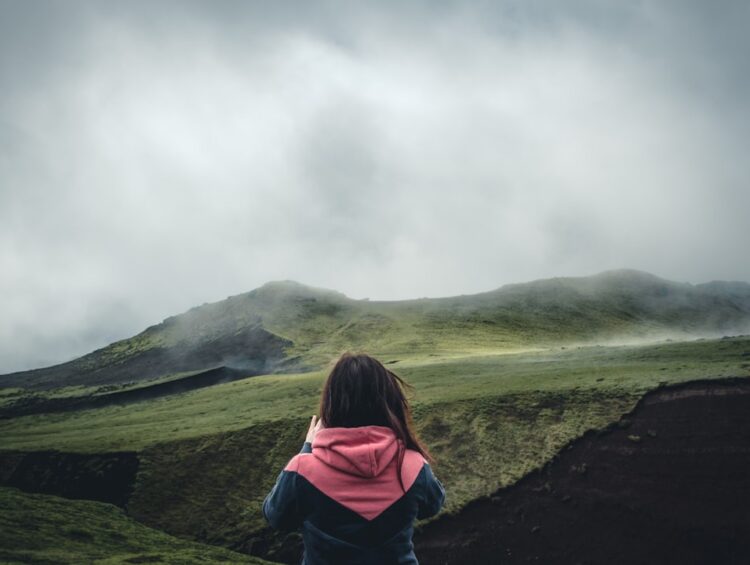
Photo by Marcel Fagin on Unsplash
Planning a trip on a budget?
Japan in 14 Days — flights, hotels, food, transport, and a full 2-week itinerary included.